

Impact of closure of the strait of Hormuz on financing of new US government debt
US federal debt today stands at $38.8 trillion. Total US debt is three times larger, but the federal portion is the key problem. More precisely the problem is uncontrolled growth of US federal debts. Federal budget deficit now is shocking $1.7 trillion per year. Interest costs are already $992 billion per year and keeps growing rapidly. It could skyrocket to $2 trillion per year due to permanently increasing debt amount and the tendency of the average portfolio rate to converge toward current market rates. Over the next 12 months, a wave of debt maturities is approaching (33% of total debt). This in itself requires mobilization and hands-on management of domestic creditors (giant asset management funds, federal agencies, commercial banks), foreign creditors (Japan, EU, UK, Arab monarchies, Norway, Switzerland), and the regulator (the Fed). It is this event that has been driving the change in Fed leadership, with pressure to cut rates regardless of circumstances.
The situation is further complicated by the fact that the debt continues to grow, requiring new external funds to invest in new borrowings that finance the federal budget deficit. Domestically successful US companies do not bring the federal government new money in the form of growing (!) federal tax contributions. Stock market growth does not translate into higher federal tax collection or federal budget deficit reduction. Quite the opposite.
This is precisely why Trump needs new creditors and additional funds from existing creditors. A commitment to invest in the US — including in government debt — is one of the key conditions of Trump's "trade deals" even with US allies. These countries are unwilling to invest in US government debt voluntarily. Moreover, most creditor countries find themselves in a financial situation similar to that of the US — budget deficits and the need to attract new borrowings into their own national debt.
The biggest problem is with Japan — the largest foreign creditor of the US federal government. Japan needs to sell US assets in order to finance its own domestic economic and financial problems. But it is not being allowed by US government to do so. The situation is temporarily managed through manual control of the yen-to-dollar exchange rate in New York and Tokyo, but this only postpones the problem.
China is reducing its holdings of US debt due to both political and domestic financial reasons. It adds to the challenge of finding replacement investors to take over China's former market share.
Economics and finance of UK and EU are in a dire state. Government debts are rising rapidly while economic growth hovers in the 0–1% range. These countries cannot provide a meaningful inflow of new (!) money into the US government debt market. They just don’t earn it.
Arab monarchies were a rare exception. While Saudi Arabia could not significantly increase its investments due to extremely high domestic expenditures (including on various megaprojects), the other monarchies were actively growing their US investments given the profitability of core oil and gas business and their small domestic populations (Qatar, UAE, and others).
Greater integration of India into Western trade perimeter will not generate an inflow of Indian capital money into US government debt — India itself is facing a financial crisis with a gradual weakening of the rupee exchange rate.
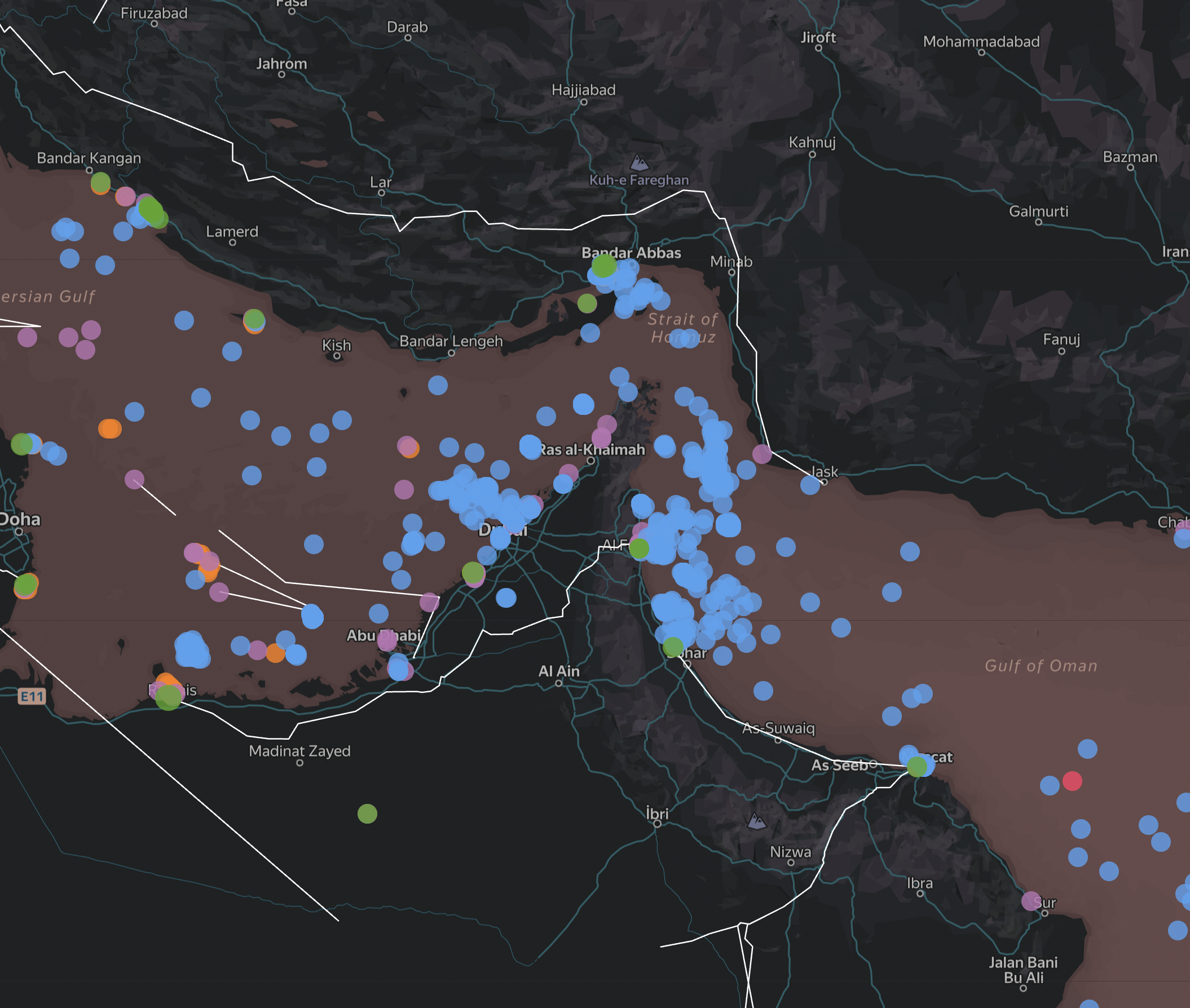
Closure of the Strait of Hormuz and ongoing destruction of Iranian oil infrastructure by Israel, combined with the general risk to the oil and gas production infrastructure of the entire Middle East region, have two primary effects in the context of US government debt.
First, the Arab monarchies will record significant losses by year-end, making it impossible to fulfill previously promised investments in the US under “trade deals”.
Second, this sharply increase in cost of import of energy and energy-intensive goods (crude oil, petroleum products, LNG, natural gas, LPG, fertilizers, thermal coal, anthracite, non-ferrous metals) for US major creditor nations. As a outcome of the war we may see cancellation of planned investments into US and even sale of existing government debt holdings by Japan, EU and UK (where these countries hold majority of their cash reserves).
US court's annulment of Trump's tariffs not only requires previously collected funds to be returned and increases the deficit accordingly (by approximately $376 billion per year), but also removes incentive for US trade counterparties to finalize previously concluded "trade deals" — deals that were driven precisely by the threat of those tariffs.
The longer Iran holds out, the more tough US debt financing problem becomes.
Non-mainstream oil and gas news and views are available in Seala AI’s telegram channel.